The transition from preclinical to Phase 1 manufacturing is critical. This is where most biopharma innovators encounter environmental monitoring (EM) for the first time.
It’s not optional. It’s not something you can figure out later. And if you get it wrong, your regulatory submission stops before it starts.
Environmental monitoring is simple in concept. It’s the process of sampling cleanroom air and surfaces. The goal is to ensure your manufacturing environment stays within GMP specifications. Furthermore, it’s how you prove to regulators that your facility produces under controlled conditions.
Here’s what you need to know before you start GMP manufacturing.
Why Environmental Monitoring Matters
GMP manufacturing requires demonstrable control over your environment. Regulators need evidence that potential contamination is actively monitored. They want to see it trended and controlled. That evidence comes from EM.
Without consistent environmental control, your manufacturing data becomes suspect. It doesn’t matter how good your product performs if your facility can’t demonstrate compliance.
Environmental monitoring serves three critical functions:
• Verifies cleanroom classification: Confirms your ISO environment meets particle count specifications
• Detects contamination trends: Identifies potential problems before they impact product quality
• Supports regulatory submissions: Provides documented evidence regulators require in your IND
What Gets Monitored
Routine environmental monitoring is not a single test but a structured program designed to assess multiple potential contamination sources within controlled environments.
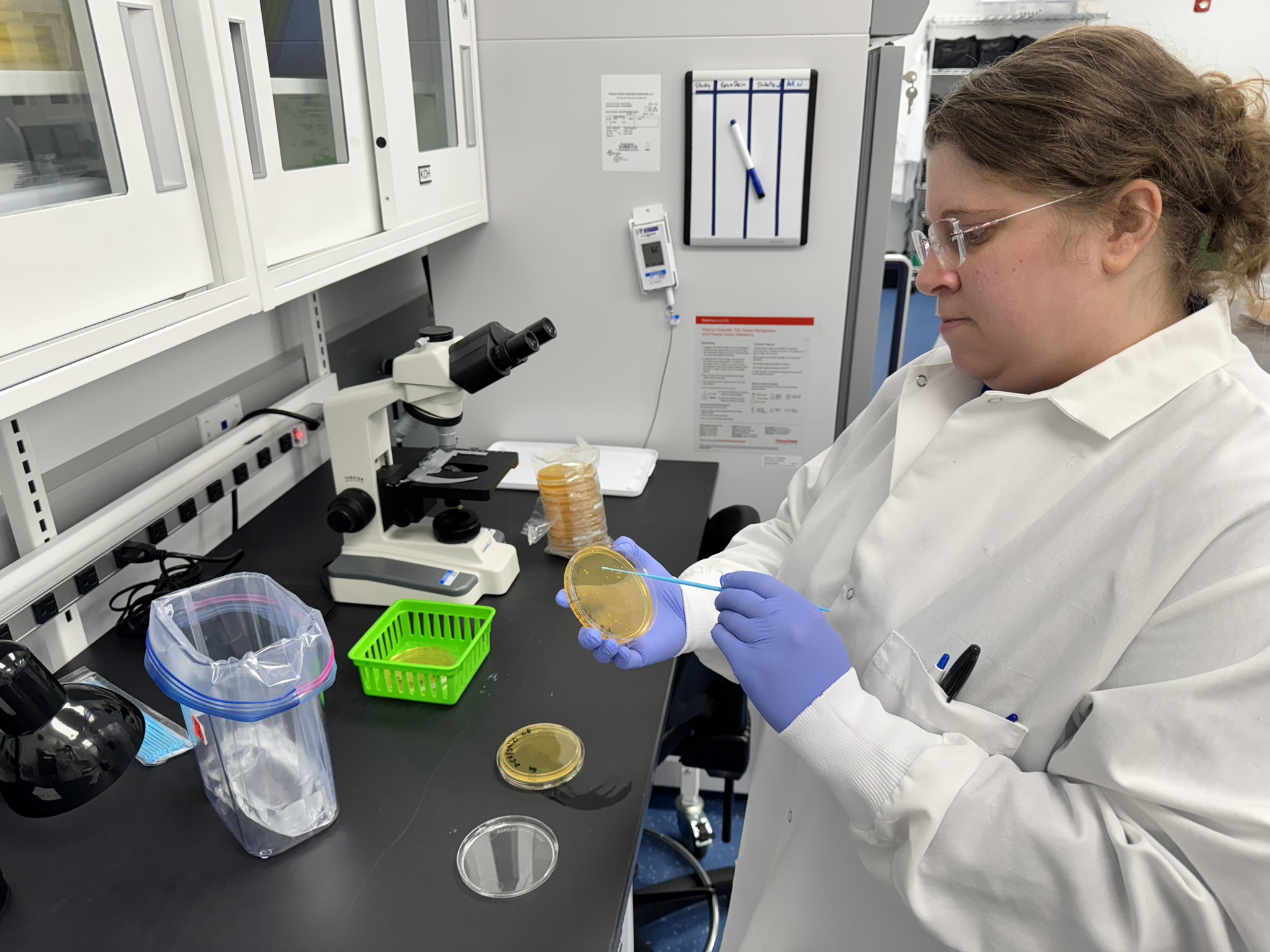
This program includes monitoring of viable airborne microorganisms, non-viable airborne particles and viable surface contamination. Collectively, these monitoring activities provide objective data to verify that cleanroom systems (e.g., HVAC/HEPA filtration), facility cleaning programs, and personnel gowning behaviors are functioning as intended to maintain a controlled state.
Data generated through routine environmental monitoring supports ongoing evaluation of facility performance, enables trending of environmental conditions, and assists in the early detection of adverse contamination events. These monitoring activities also provide a basis for investigation, corrective actions, and continuous improvement of contamination control strategies within the facility.
Frequency and Sampling Plans
How often you sample depends on several factors. These factors include your cleanroom classification, the criticality of the operation, and your established baseline. ISO 14644 and FDA guidance set the framework, however your sampling plan should be risk-based and specific to your process.
The goal is to establish a meaningful baseline. This baseline shows your facility operates consistently within specification. Once you have that baseline, you can detect deviations quickly.
Alert and Action Limits
Your EM program isn’t just about collecting data. It’s also about knowing when that data signals a problem.
Alert limits are early warning signs. They indicate your environment may be trending out of control. Exceeding an alert limit triggers an investigation. However, it doesn’t stop manufacturing.
Action limits indicate a definitive problem. Exceeding an action limit requires immediate action. Operations may halt until the issue is resolved.
These limits should be based on your facility’s baseline performance. Don’t use arbitrary numbers from guidance documents. Instead, regulators want to see that your limits reflect your environment’s actual capability.
A common mistake is setting limits too tight. This happens when companies base them on a few clean runs. Your limits need to account for normal variability. At the same time, they still need to catch genuine contamination events.
Trending and Data Analysis
Collecting EM data is only half the job. In addition, you need to trend it, analyze it, and act on it.
Trending identifies patterns that individual sample results might miss. For example, a slow upward trend in viable counts could indicate cleaning issues. It might also signal equipment wear or aseptic training gaps. Catching these trends early prevents excursions and investigations.
Your QA team should review EM data regularly. Reviews typically look for:
• Upward or downward trends
• Recurring contamination in specific locations
• Correlation between manufacturing activities and contamination spikes
• Seasonal or environmental factors affecting results
Common Pitfalls to Avoid
Most early-stage companies make the same environmental monitoring mistakes:
Underestimating the workload: EM is labor-intensive. Someone needs to collect samples, incubate plates, count colonies, and trend data. They also log results, investigate excursions, and maintain equipment/supplies. This typically becomes a full-time role.
Poor documentation: EM data without proper documentation is useless in an audit. Every sample needs a traceable record. This includes who collected it, when, where, under what conditions, and the result.
Treating EM as a checkbox: EM is not a compliance formality. Rather, it’s your early warning system. Simply collecting samples to satisfy regulators isn’t enough. You need to analyze trends and act on results.
Not involving EM in facility design: Sampling locations should be determined during facility/process design. Doing it after the fact creates problems. If your EM plan does not include critical working surface areas, you designed wrong. Similarly, if it disrupts manufacturing flow, you designed wrong.
Inadequate testing capabilities: You need access to qualified testing capabilities to process your EM samples. Many companies assume they can handle this in-house. Then they realize they lack the equipment, space, or trained personnel.
Build vs. Partner
Building your own facility means building your own EM program from scratch. You need to hire qualified technicians and purchase sampling equipment/materials. You also need to establish testing capabilities. Additionally, you must establish baseline limits and develop SOPs.
Partnering with an experienced GxP services and cleanroom hosting provider is different. The EM infrastructure is already in place.
Either way, environmental monitoring needs planning before you start GMP manufacturing. It’s not something you can add later.
The Bottom Line
Environmental monitoring is not something you figure out as you go. By the time you’re ready for Phase 1 manufacturing, your EM program should be ready. It should be established, validated, and running smoothly.
Transitioning to GMP manufacturing is challenging. Environmental monitoring often feels overwhelming. That’s normal. It’s complex, resource-intensive, and unforgiving if done wrong.
The good news is that you don’t have to solve it alone. You have options. You can build your own capability. Alternatively, you can partner with an experienced GxP contract services provider. Whatever you choose, make sure environmental monitoring is part of the conversation from day one. Your regulatory submission depends on it.
Make it yours
Choose your equipment, choose your layout, choose your services. Make yourself at home in a space designed for you.