
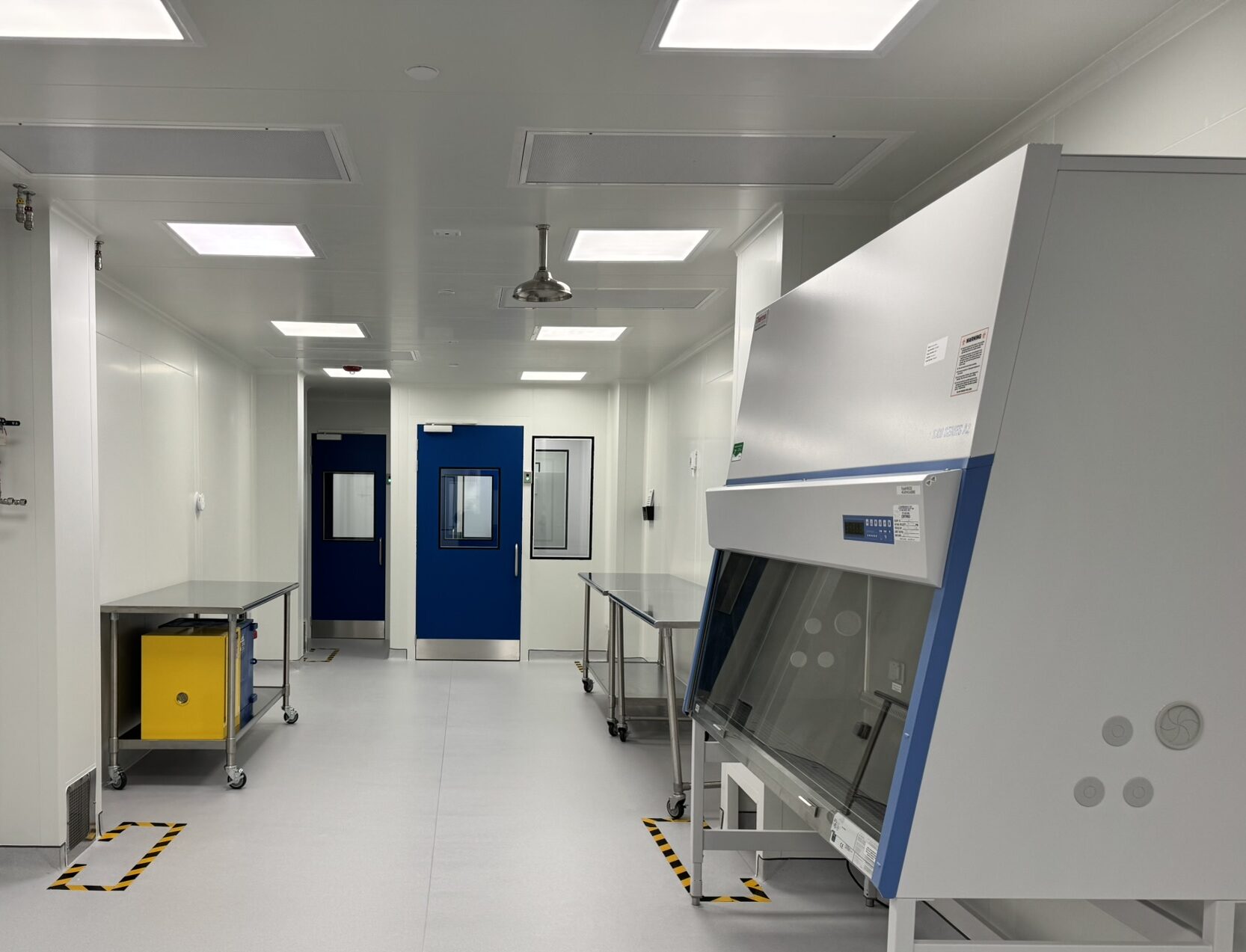
Manufacturing your drug product is a major milestone. You’ve invested millions in building or contracting a GMP facility and successfully produced clinical batches. But once manufacturing is complete, a different timeline begins: the FDA approval process.
What many companies don’t account for is what happens to their manufacturing facility during the months or years of regulatory review if the company isn’t granted an expedited review. The answer? It sits idle while costs continue to accumulate.
The FDA Approval Timeline: 4-6 Wait Gates
The FDA approval process involves several distinct review periods where sponsors wait for regulatory feedback or clearance. After submitting an Investigational New Drug (IND) application, the FDA has 30 days to review the submission. Many companies continue manufacturing during this window, but clinical dosing cannot begin until the IND is cleared, and any FDA requests for information during or after the review can extend the timeline.
End-of-Phase meetings with the FDA are informal but can introduce real delays. Scheduling these meetings, preparing materials, and waiting for feedback can add weeks or months to your timeline. Once you submit a New Drug Application (NDA) or Biologics License Application (BLA), the FDA conducts a filing review to determine if the application is complete, taking approximately 60 days.
The substantive review of your application takes six to ten months for standard review, or potentially longer depending on complexity. During this time, no manufacturing is occurring. Pre-approval inspections and labeling discussions add additional time that can be difficult to predict.
In practice, companies face four to six meaningful FDA wait gates that can stretch the approval process to 12-18 months or longer. And here’s the critical point: during this entire period, your manufacturing facility is operational but idle.
Clinical Holds Add Months to the Timeline
For cell and gene therapy programs, the timeline extends further. A typical FDA clinical hold lasts 3 to 12 months, with 6 months being a reasonable industry average. Complex programs often experience multiple holds throughout development.
The duration depends on the severity of the issue:
- Minor CMC clarification: 1-3 months for additional documentation or testing
- Moderate manufacturing issues: 3-6 months for potency assays, comparability, or sterility validation
- Safety signals: 6-12 months for root-cause investigation and protocol changes
- Complex platform or vector issues: 12+ months for insertional mutagenesis, vector shedding, or long-term follow-up concerns
- These holds are standard for advanced therapy development, but they compound the idle facility problem. Your manufacturing infrastructure continues generating costs while clinical programs are on hold pending FDA feedback.
The Cost of an Idle GMP Facility
Building a GMP manufacturing facility requires significant capital investment, typically $10-50 million depending on size and complexity. But the upfront construction cost is only part of the equation. Once built, these facilities generate ongoing operational expenses whether or not they’re actively manufacturing.
Even when idle, a GMP facility incurs substantial costs:
Staff: Quality personnel, facility engineers, and operational staff remain employed to maintain readiness and compliance
Utilities: HVAC systems, cleanroom environmental controls, and facility utilities continue running
Maintenance: Equipment maintenance, calibration, and preventive maintenance schedules continue
Compliance: Environmental monitoring, documentation, and quality system maintenance are ongoing requirements
For a small GMP facility, these combined costs typically range from $150,000 to $300,000 per month. Over a typical 12-month FDA review period, idle facility costs can accumulate to $1.8 million to $3.6 million. This represents pure carrying cost with no manufacturing output.
For biotechnology companies operating with limited capital, these idle costs can be challenging. The capital deployed in facility construction continues to generate expenses during regulatory wait periods that are largely outside the company’s control.
The Traditional CDMO Model Has Its Own Cost Structure
Outsourcing to a traditional contract development and manufacturing organization (CDMO) doesn’t eliminate the idle cost problem. It just shifts who carries the burden.
Many CDMO agreements include annual production commitments where sponsors pay for contracted manufacturing capacity whether or not patients are enrolled or trials are active. If your clinical program goes on hold for six months while the FDA reviews a safety signal, you’re still paying for reserved manufacturing capacity you’re not using.
This model made sense when CDMO capacity was scarce and facilities needed guaranteed revenue to justify capital investment. But for sponsors, it means continuing to pay for manufacturing infrastructure during the same regulatory waiting periods that would leave an owned facility idle.
The Manufacturing Gap in Drug Development
The pharmaceutical development timeline creates a fundamental mismatch between manufacturing needs and facility utilization.
High-intensity periods include process development and optimization, clinical manufacturing campaigns, validation batches, and commercial production. Low or zero manufacturing periods include regulatory submission preparation, FDA review and waiting periods, time between clinical phases, and post-approval before commercial launch.
Companies that build dedicated manufacturing facilities or commit to annual CDMO production targets are essentially paying full operational costs during both high-intensity and zero-manufacturing periods.
Cleanroom Hosting: A Different Economic Model
Cleanroom hosting offers an alternative approach that aligns manufacturing costs with manufacturing activity. Instead of building a dedicated facility, companies license dedicated or semi-dedicated cleanroom space within a multi-tenant GMP facility. The hosting provider maintains the building infrastructure, environmental monitoring, quality systems, and compliance documentation, while the client company retains control over manufacturing operations.
The economic difference becomes clear during regulatory waiting periods:
Traditional owned facilities continue incurring full staff costs, utilities and maintenance, and compliance costs while manufacturing sits idle. Traditional CDMO arrangements often require payment for contracted capacity regardless of manufacturing activity. Cleanroom hosting allows manufacturing space fees to be paused or minimized, with infrastructure costs borne by the facility operator across multiple tenants. This reduces holding costs during non-manufacturing periods and preserves capital for R&D and operations.
Beyond cost management during idle periods, cleanroom hosting provides flexibility to scale capacity as programs advance. Companies can expand into additional cleanroom suites within the same facility network without the lead time and capital investment of facility construction.
The FDA Review Timeline Is Not In Your Control
One of the most challenging aspects of the idle facility problem is that FDA review timelines are largely outside sponsor control. While companies can work to submit high-quality, complete applications, the actual review process follows regulatory timelines. Clinical holds, safety reviews, and CMC questions extend timelines further, particularly for advanced therapies.
Manufacturing capacity, however, is within your control. The question becomes: should your manufacturing infrastructure be fixed and capital-intensive, or flexible and aligned with actual manufacturing needs?
Reimagining Manufacturing Infrastructure
The traditional model of building dedicated manufacturing facilities made sense in an era when pharmaceutical production was relatively standardized and regulatory timelines were more predictable. But today’s biotechnology landscape is different. Novel modalities require specialized manufacturing approaches. Regulatory pathways are complex and variable. Capital is scarce for early-stage companies. Speed to clinic and flexibility are competitive advantages.
In this environment, manufacturing infrastructure that can scale with program needs and pause costs during non-manufacturing periods offers strategic value beyond simple cost reduction.
Conclusion
The period between manufacturing completion and FDA approval represents a significant but often overlooked cost burden for companies that own dedicated manufacturing facilities or commit to annual CDMO production targets. With 12-18 months of regulatory review involving multiple wait gates, plus additional months for clinical holds common in advanced therapy development, idle facility costs can accumulate to millions of dollars.
Cleanroom hosting provides an alternative model where manufacturing capacity flexes with program needs. Companies pay for space when they’re manufacturing, not when they’re waiting for regulatory decisions beyond their control.
Make it yours
Choose your equipment, choose your layout, choose your services. Make yourself at home in a space designed for you.