
By Adam Bartley, COO Chrysalis | Connect on LinkedIn
Alignment of Registrational Manufacturing with Commercial Supply
When sponsors conduct registrational clinical trials intended to support a Biologics License Application (BLA) or New Drug Application (NDA), regulatory authorities expect that the manufacturing process, facility, and controls used during pivotal and late-phase trials are representative of the commercial manufacturing strategy.
Under FDA regulations, the manufacturing facility must be clearly defined in the application and is subject to inspection prior to approval. Not only does the FDA evaluate the product itself, but they also assess the manufacturing process, facility design and controls, and overall quality systems that support production.
Relevant regulatory expectations include:
- 21 CFR 314.50(d)(1) – NDA submissions must include a full description of manufacturing methods, facilities, and controls used for the drug product.
- 21 CFR 601.2(a) – BLAs must include information demonstrating the safety, purity, and potency of the biological product, including manufacturing facilities and controls.
- 21 CFR 211.22 & 211.100 – Require robust quality systems and validated manufacturing processes.
Because of this framework, the FDA frequently inspects the commercial manufacturing facility as part of the approval process and evaluates whether the site and process can support a reliable commercial supply.
Capacity Planning and Supply Assurance
For therapies addressing serious or life-threatening conditions, regulators often evaluate whether the sponsor has sufficient manufacturing capacity and operational readiness to supply patients following approval.
While the FDA does not mandate a specific capacity threshold, regulators may review:
- Manufacturing scale and throughput
- Facility capacity relative to expected demand
- Supply chain robustness
- Redundancy and contingency planning
This expectation is reinforced through FDA guidance such as:
- FDA Guidance: Process Validation — General Principles and Practices (2011)
- ICH Q7 – Good Manufacturing Practice for Active Pharmaceutical Ingredients
- ICH Q10 – Pharmaceutical Quality System
These frameworks emphasize that manufacturers must establish systems that ensure continued product availability and control over manufacturing operations.
Business Continuity and Risk Management
Manufacturers are expected to manage operational risks that could interrupt drug supply. Regulatory expectations for this are embedded within quality system requirements.
Relevant regulatory frameworks include:
- ICH Q9 – Quality Risk Management
- ICH Q10 – Pharmaceutical Quality System
- 21 CFR 211.180(e) – Requires ongoing review and evaluation of manufacturing processes to ensure quality and reliability.
These expectations implicitly require manufacturers to consider supply continuity risks, including facility outages, equipment failure, environmental or contamination events, supply chain disruptions
Sponsors relying on a single dedicated manufacturing facility (whether internal or outsourced) may face operational vulnerability if production is interrupted.
Structural Advantages of a Standardized Manufacturing Network
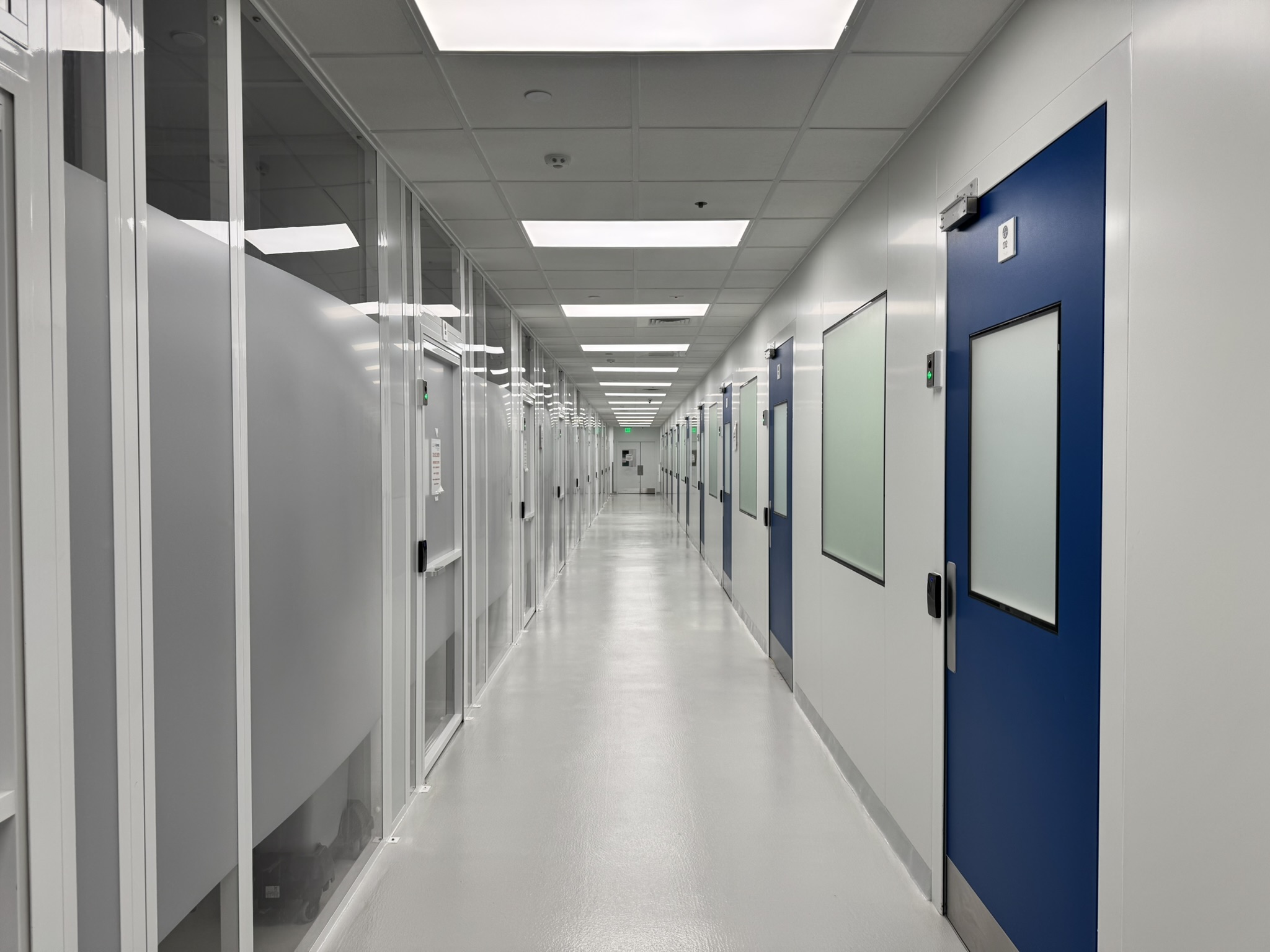
A manufacturing network such as Chrysalis, designed with identical cleanroom configurations, harmonized equipment, and a unified Quality Management System (QMS) provides several regulatory and operational advantages.
Rapid Business Continuity Response
When facilities are designed with identical infrastructure, equipment, and operating procedures, manufacturing activities can be transferred between sites with minimal operational disruption.
This design approach supports faster response to unexpected facility events, reduced risk of supply interruptions, and streamlined regulatory comparability assessments.
Because facilities operate under a single integrated QMS, the documentation and quality controls remain consistent across the network.
Regulatory Familiarity and Predictability
When the FDA inspects a manufacturing network that uses standardized cleanroom designs and a unified QMS, regulators gain visibility into a scalable operational platform.
This provides confidence that manufacturing processes can scale within the network, additional cleanroom capacity can be activated if required, and operational controls remain consistent across sites.
As a result, regulators can evaluate capacity not only at the individual cleanroom level but also across the total available manufacturing footprint.
Built-In Capacity Expansion
A standardized facility network allows expansion within the existing infrastructure by activating additional cleanrooms operating under the same design and quality system.
This provides sponsors with the ability to scale production without introducing new facility designs, new QMS frameworks, and extensive regulatory requalification. In contrast, sponsors that construct a single dedicated manufacturing facility typically establish a fixed manufacturing capacity tied to that specific building.
Expanding capacity in this scenario often requires construction of a new facility, technology transfer to a new site, and regulatory approval through a comparability protocol.
Comparability Considerations When Adding Manufacturing Sites
When sponsors introduce additional manufacturing sites after approval, regulatory authorities will require demonstration that product quality remains unchanged. This is typically achieved through comparability studies as described in:
- ICH Q5E – Comparability of Biotechnological/Biological Products Subject to Changes in their Manufacturing Process
Establishing comparability across facilities can be complex when the new site differs in cleanroom design, equipment platforms, environmental controls, and quality systems
If a sponsor builds a second manufacturing facility, regulators may require a comprehensive comparability package to demonstrate that product quality, safety, and efficacy remain unchanged.
Limitations of Traditional CDMO Networks
Contract development and manufacturing organizations (CDMOs) are often perceived as offering strong business continuity because they operate multiple sites. However, many CDMO networks have grown through acquisition, resulting in operational heterogeneity across facilities.
Common challenges include:
- Different QMS at each site within the CDMO network
- Different cleanroom designs and facility layouts
- Different equipment platforms and manufacturing processes
- Independent site governance structures
These differences can complicate regulatory comparability assessments when transferring production between facilities. In these cases, regulators may view the transfer as a true manufacturing change rather than a site redundancy, potentially requiring more extensive regulatory review and validation.
Strategic Implications for Sponsors
When designing a manufacturing strategy for registrational trials and commercial supply, sponsors must consider:
- Regulatory expectations for manufacturing consistency
- Long-term capacity planning
- Supply continuity risks
- Operational scalability
Manufacturing within a standardized, unified manufacturing network provides a structure that supports these objectives by enabling:
- Regulatory transparency
- Operational redundancy
- Scalable manufacturing capacity
- Simplified comparability pathways
This approach can reduce both regulatory risk and operational disruption as therapies transition from clinical development to commercial supply.
Download 2026 Regulatory and Operational Advantages of a Standardized Manufacturing Network pdf
Make it yours
Choose your equipment, choose your layout, choose your services. Make yourself at home in a space designed for you.